The science behind verification

Trees and plants absorb chemical elements from the environments in which they grow. Climate, geology, water and soil shape those signals, creating spatial patterns across landscapes. Stable isotopes and trace elements are two of the most useful ways of reading that variation.
Multi-element analysis (MEA)

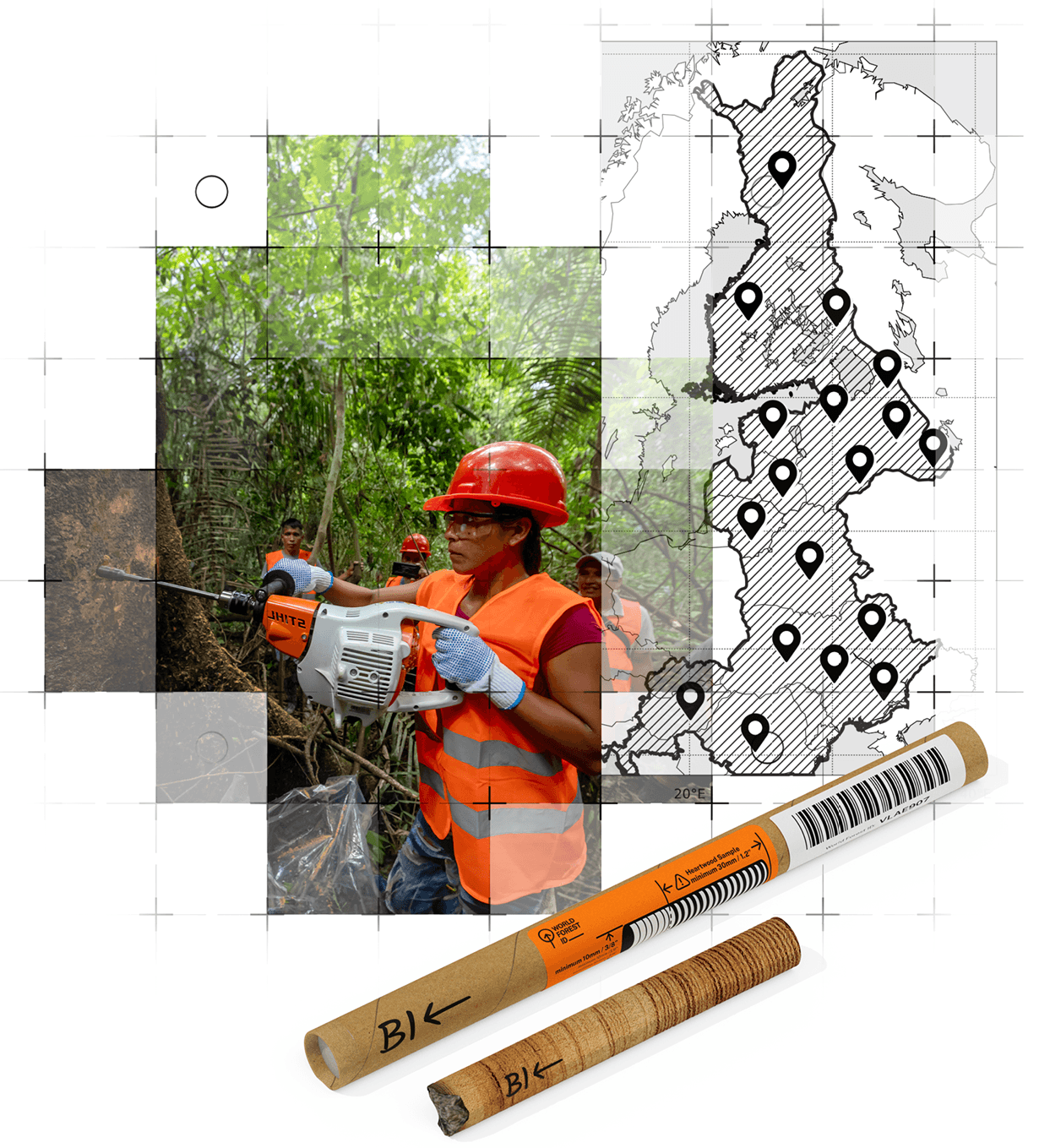
Multi-element analysis measures very small quantities of chemical elements in a sample. Because plants absorb these elements from the soil as they grow, the resulting patterns can vary across landscapes according to location.

Stable Isotopes analysis (SIRA)

Stable isotopes are forms of the same element with different atomic weights. This affects how they are distributed across landscapes through rainfall and other environmental processes.
Ground-truth reference samples are the foundation

Ground-truthed reference samples are the foundation
World Forest ID collects georeferenced reference samples from forests and farms around the world. These samples are gathered through standardised protocols designed to preserve chain of custody, protect metadata integrity and ensure that material is suitable for a broad range of scientific techniques. This reference collection creates the scientific baseline for origin verification.

Our approach stands out by integrating the results of multiple scientific techniques in a peer reviewed ‘origin model’, refining results by fusing chemical values that vary across the spatial range with environmental and earth observation data, available at scale at low cost. Once a reference model has been developed it can be used by companies, enforcement agencies and NGOs to scrutinize the claimed harvest geolocation of traded products.

Turning chemical reference data into origin models

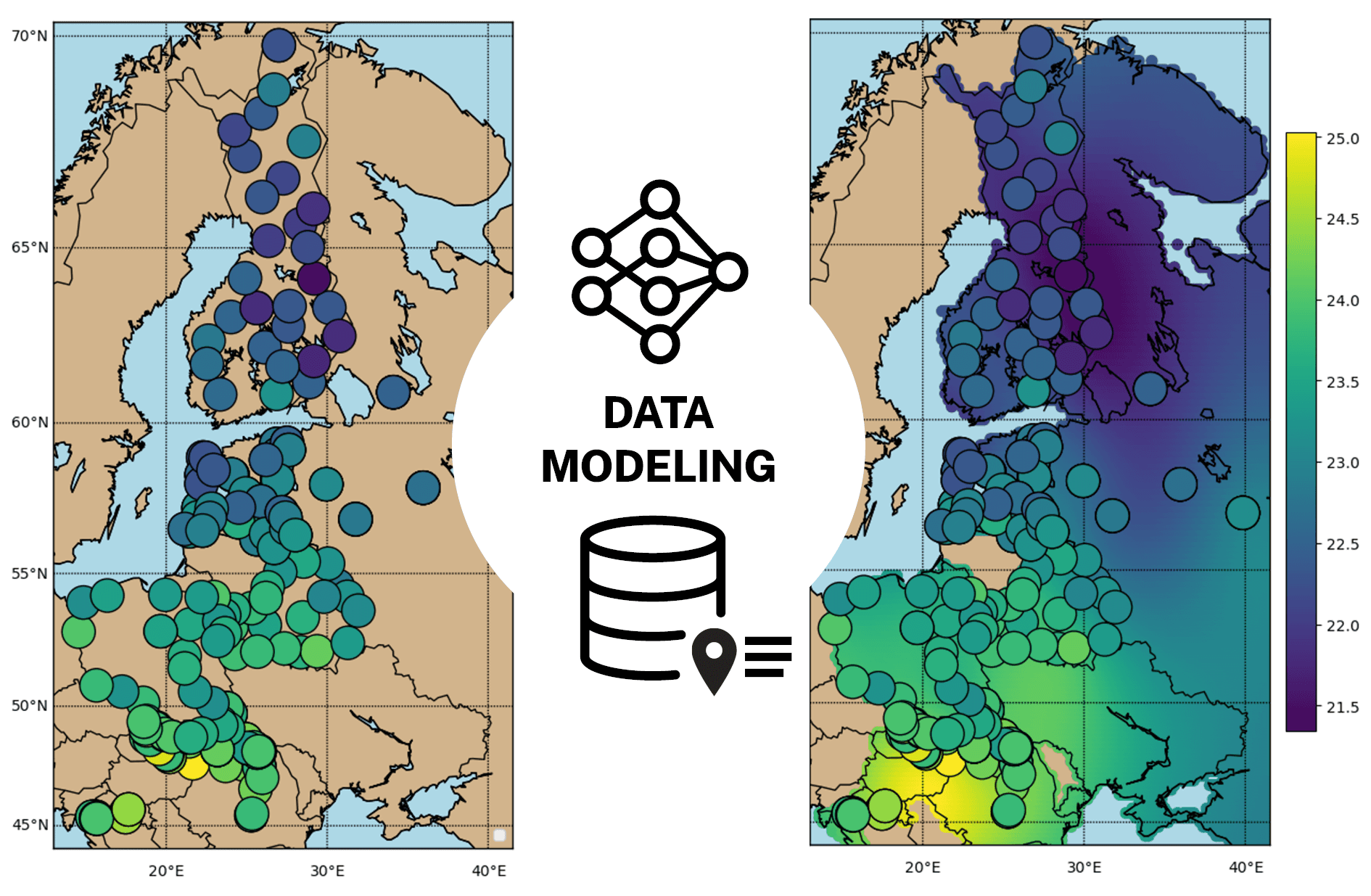
Chemical results from reference samples are combined with environmental and earth observation data to build peer-reviewed spatial origin models. These models help interpret chemical variation across species ranges and landscapes with greater granularity, including in areas where physical samples have not yet been collected. This approach is supported by published, peer-reviewed research, including World Forest ID’s Nature Plants paper.

Our approach stands out by integrating the results of multiple scientific techniques in a peer reviewed ‘origin model’, refining results by fusing chemical values that vary across the spatial range with environmental and earth observation data, available at scale at low cost. Once a reference model has been developed it can be used by companies, enforcement agencies and NGOs to scrutinize the claimed harvest geolocation of traded products.

Testing claimed origin by comparison

To test a product’s declared harvest origin, a laboratory measures the same chemistry in a traded sample. Those results are then compared against World Forest ID reference data to assess whether the sample is consistent with the claimed location. The Evaluation Platform generates an evaluation report based on independent chemical and spatial evidence, using standardised methods that support comparable results across laboratories.

Our approach stands out by integrating the results of multiple scientific techniques in a peer reviewed ‘origin model’, refining results by fusing chemical values that vary across the spatial range with environmental and earth observation data, available at scale at low cost. Once a reference model has been developed it can be used by companies, enforcement agencies and NGOs to scrutinize the claimed harvest geolocation of traded products.

World Forest ID is an international nonprofit protecting forests through science-based product verification. © 2026 World Forest ID. All rights reserved. The World Forest ID® logo is a registered trademark of the World Forest ID Association in the United States.

World Forest ID Association

A US, 501(c)(3) nonprofit
1 Thomas Cir NW Suite 700
Washington, DC 20005, USA

World Forest ID Stichting

A foundation registered in the Netherlands, Fluwelen Burgwal 58,
2511 CJ Den Haag, Netherlands

info@worldforestid.org

World Forest ID is an international nonprofit protecting forests through science-based product verification. © 2026 World Forest ID. All rights reserved. World Forest ID® is a registered trademark of World Forest ID Association.

World Forest ID Association
A US 501(c)(3) nonprofit
1 Thomas Cir NW, Suite 700
Washington, DC 20005, USA

World Forest ID Stichting
A foundation registered in the Netherlands
Fluwelen Burgwal 58, 2511 CJ Den Haag,
Netherlands


info@worldforestid.org

Create a free website with Framer, the website builder loved by startups, designers and agencies.